Navigating the shift toward omnichannel engagement requires understanding both the operational hurdles and the strategic path forward. In this piece, we’ll discuss the common omnichannel challenges businesses face, and how they address these through a dedicated engagement platform or custom-built integrations.
Omnichannel Implementation Challenges
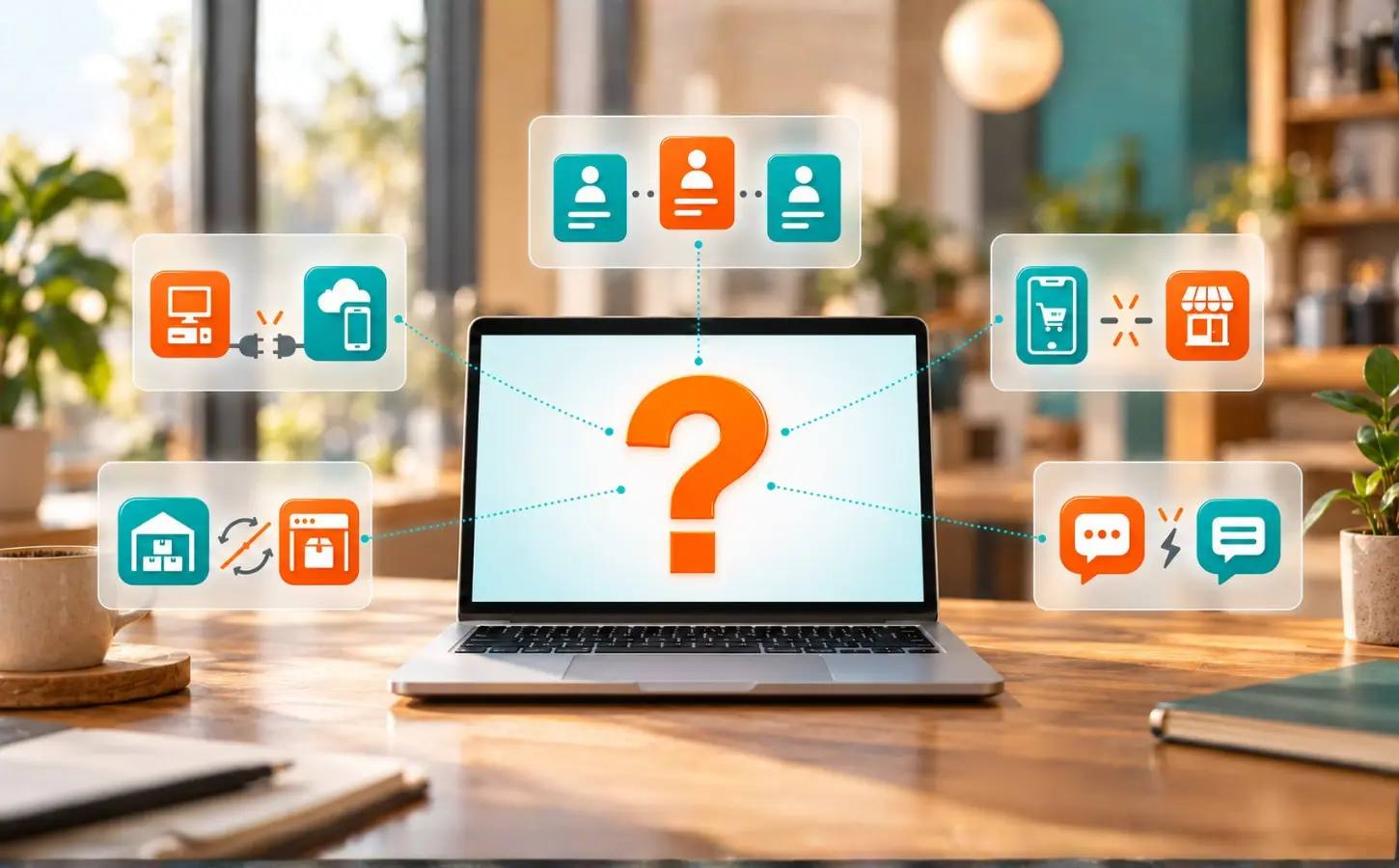
While a centralized engagement strategy can significantly elevate the customer experience, an improperly executed framework risks underperforming due to the following omnichannel challenges:
- Fragmented customer profiles: Customer data gets trapped in isolated channels, preventing teams from consolidating key interactions into a single profile. This lack of unified context makes it difficult to deliver a seamless customer experience across touchpoints, with 47% of loyalty experts identifying integration as one of the key obstacles to customer retention.
- Disconnected customer journey: 71% of customers expect companies to have full visibility of interactions across channels. Without this, customers are forced to repeat their concerns, creating unnecessary friction that leads to customer frustration and erodes trust in a brand.
- Inconsistent messaging: Managing separate systems (e.g., email delivery services, SMS gateways, CRM systems, etc.) increases operational overhead and labor. Because each tool operates under its own technical constraints, delivering consistent, aligned messaging across all touchpoints becomes significantly harder.
- Unsynced inventory: Some systems update in batches rather than in realtime, causing inventory data to lag behind in other sales channels. This visibility gap leads to stockouts, cancelled orders, and unexpected refunds that harm brand reputation and customer satisfaction.
- Bridging old and new technologies: Integrating legacy architectures with modern, cloud-based platforms often presents complex technical hurdles. CIOs have reported a 10-20% increase in project costs when modernizing existing systems, showing the struggle behind custom-built integrations that demand significant upfront investment and incur maintenance costs.
Implementation With vs. Without a Platform
Customer engagement platforms were built to address common omnichannel implementation challenges. The comparison table below details key operational differences when implementation is done through a dedicated engagement platform versus manual, custom-built integrations.
| Operational Requirement |
Dedicated Omnichannel Engagement Platform |
Manual Omnichannel Integration |
| Channel setup |
Connect all communication channels (e.g., WhatsApp, email, SMS, website chat, and phone calls) using a single plug-and-play setup. All messages follow the same standard layout everywhere. |
Build separate, technical connections for every single channel. Each tool requires its own unique format, rules, and ongoing upkeep from specialized technical suppliers. |
| Customer data handling |
A single customer database that automatically links every interaction across touchpoints to build one complete, unified customer profile. |
Isolated data silos where customer history is scattered across different software. Unifying these records requires complex, custom-built data pipelines to link buyer identities together. |
| Customer service handoffs |
A shared agent inbox with complete cross-channel conversation history, enabling support representatives to pick up conversations smoothly without losing past context. |
Disconnected handoffs where customer service agents must constantly switch between separate dashboards, forcing customers to repeat their concerns whenever they change channels. |
| Message coordination |
A centralized control panel that automates multi-channel customer journeys, sets backup channels if messages fail, limits notification spam, and regulates message timing. |
Independent message delivery where automated message sequences must be manually created, programmed, and maintained in custom background systems or complex middleware. |
| Reporting and analytics |
A single performance dashboard tracking campaign attribution, complete customer journeys, channel effectiveness, and overall engagement metrics in one view. |
Separate reporting streams where campaign metrics must be manually exported and combined in external reporting tools to reconstruct full end-to-end customer funnels. |
| Cost structure |
Subscription-based or pay-as-you-go pricing models that offer predictable operational expenses with minimal upfront engineering setup. |
Requires high upfront investments on software development, with ongoing engineering expenses to maintain integrations, update formats, and manage multiple vendor contracts. |
| Flexibility |
Fast deployment with built-in features out of the box, but bound by vendor platform capabilities, service limits, and interface rules. |
Complete control over system design, data storage, custom user interfaces, and routing rules with zero vendor lock-in at the cost of longer development lead time. |
Implementing Omnichannel Engagement, Your Way
An omnichannel engagement platform offers a convenient, centralized way to build your engagement infrastructure. It consolidates customer data into a single database to keep context accessible, empowering brands to derive deeper market insights and run synchronized marketing campaigns.
However, some enterprises still opt to connect their channels manually to retain full control over system design and rollout timelines. While custom-building an in-house architecture offers maximum control, it often demands steep development costs and extended deployment schedules.
RUSH Omnichannel Engagement bridges this gap by delivering need-based solutions, hands-on support, and additional customizations without forcing you to build from scratch. More than just software, RUSH acts as a complete engagement partner through several distinct advantages:
- Solution Fit: Instead of pushing a rigid platform, we evaluate your actual operational needs first, matching the right capabilities to your customer journeys, channels, scale, and required level of automation.
- Flexible Portfolio: Access diverse engagement capabilities across direct messaging, multi-step journey automation, and AI-driven conversational experiences within a single portfolio.
- Implementation & Enablement: Receive dedicated, end-to-end support from initial solution scoping to full activation, ensuring your platform is built and optimized for real business outcomes.
- Extendable Customer Experience: Seamlessly scale your strategy beyond customer communication by integrating with RUSH’s broader loyalty and digital commerce solutions as your business expands.
If you want the strategic control of manual integrations without the ongoing upkeep, RUSH Omnichannel Engagement provides the ideal middle ground. Its tiered solutions combine flexibility, extensible features, and hands-on enablement with the speed and reliability of an enterprise-ready platform.
Take control of your customer experience and discover how to implement Omnichannel Engagement, your way. Book a consultation with our team today.
Frequently Asked Questions
What is the omnichannel experience? An omnichannel customer experience occurs when a consumer seamlessly initiates, continues, and completes their interaction (e.g., a purchase, inquiry, or complaint) across social media, the website, mobile app, and other connected channels without losing context.
What are the limitations of omnichannel journey automation tools? The success of journey automation tools relies heavily on data quality and proper setup. Poor data can result in misaligned messaging, while automated broadcasts risk overwhelming customers with spam if improperly configured.
Can you give me an example of an omnichannel customer experience? A customer might discover a social media ad for a dress, click through to the online store, and earn a reward voucher upon completing their purchase. When they later open the brand's mobile app, they'll see the voucher instantly reflected in their account, ready to be redeemed for their next order.
How can I improve customer engagement with omnichannel strategies? Centralizing customer data enables brands to analyze audience preference and behavior, tailoring content that drives stronger engagement. Having a single database also makes it possible to launch synchronized marketing executions seamlessly across multiple channels.
How much does an omnichannel marketing platform cost? Omnichannel platform costs can scale rapidly based on contact volume, user seats, and custom developments. To find the right fit for your business goals and your budget, RUSH recommends requesting a demo or consultation.