
The challenge for most F&B operations is not getting new customers in the door. It is getting them back. Research shows that 70% of first-time restaurant diners never return without a reason to do so. And in a market where restaurant loyalty programs already have over 10 million members in the Philippines, the question is not whether your restaurant needs a loyalty program, but whether the one you are running is actually working.
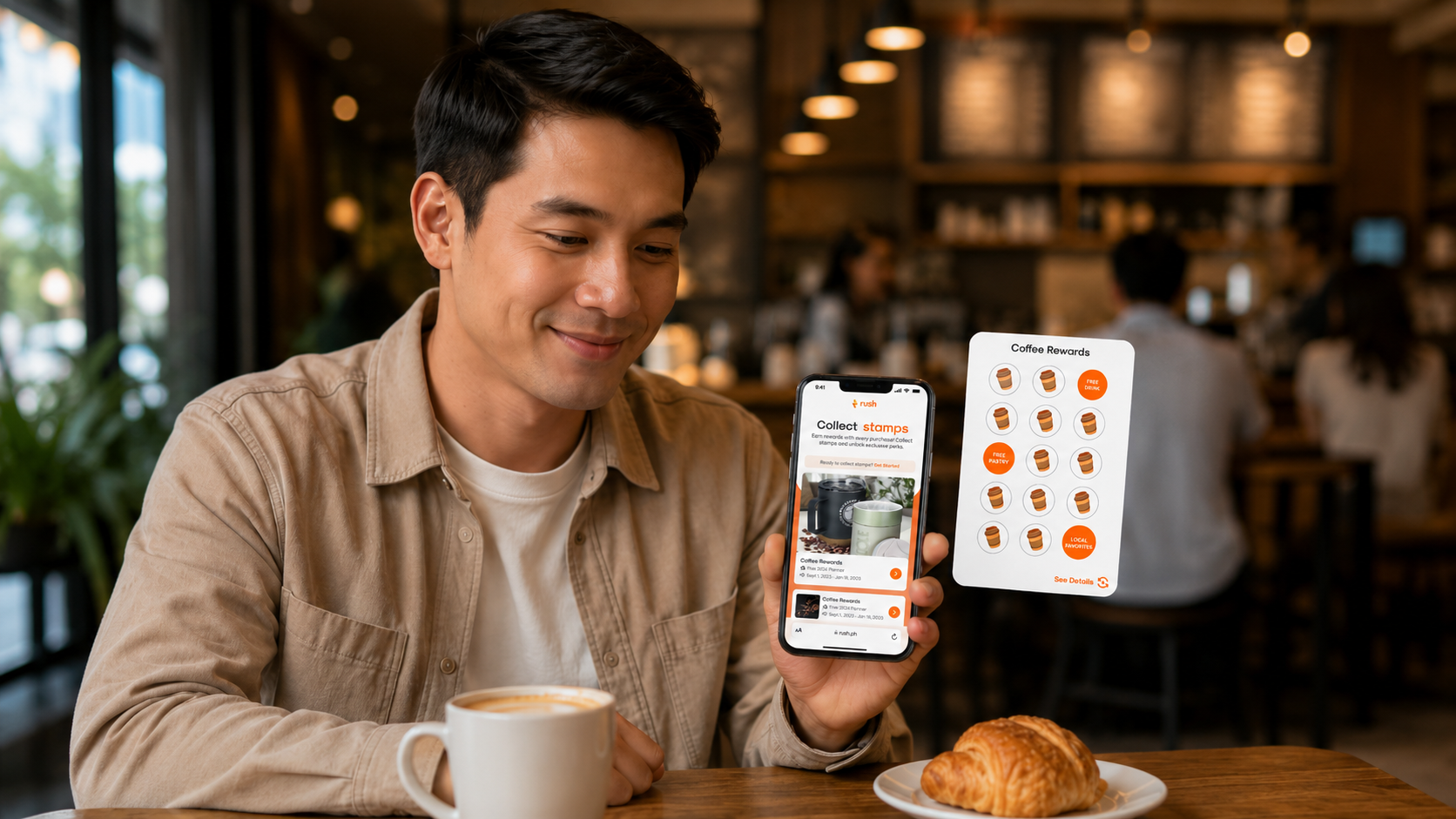
Restaurants use digital punch card programs to give diners a concrete reason to return. Every visit earns a stamp, every stamp moves a customer closer to a reward, and every reward creates a habit. That habit is what turns one-time tables into regulars.
Learn more about this traditional-turned-digital rewards program below.
Restaurants average a customer retention rate of around 55%, well below the global benchmark of 75%. That gap represents tables that could have been filled by people who already know your brand, liked your food, but simply had no reason to choose you again over the next option on their delivery app or the new place that opened down the street.
Paper stamp cards were supposed to solve this. And for a while, they worked. But they have a fundamental problem: human error. They depend on the customer remembering to bring them. Cards get lost. Stamps get skipped. Staff forget to offer them during busy service. The classic punch card ends up at the bottom of a bag long before the customer earns their free meal.
The result is a loyalty program that exists in theory but does not function in practice. Rewards programs for restaurants have come a long way since then, and the gap between a paper stamp card and a well-run digital loyalty program is now significant enough to affect revenue directly. Digital punch cards fix what paper never could.
A digital punch card works the same way as a physical one, but it lives on a customer's phone. The customer scans a QR code at the counter or table, the stamp is recorded automatically, and the system tracks their progress toward a reward without any physical card changing hands.
For operations teams, this matters because nothing depends on memory. There is no card to print, stamp to miss, or argument at the counter about whether that last visit counted. The program runs in the background while your staff focuses on service.
Customers have a visual reminder of when they’re close to earning a reward. When they earn their reward, staff can dispense this remotely. . When customers stop coming in, you know exactly about their last visitand can act on it.
The simplest use case is the one most restaurants start with: buy nine, get the tenth free. Clear, familiar, and effective because customers know exactly what they are working toward.
But the format is more flexible than that. Restaurant rewards programs use the digital punch card format to drive specific behaviors beyond just visit frequency.
During a new branch opening, a punch card program gives first-time visitors a reason to come back before the novelty wears off. During slow periods, a limited-time card with a faster reward cycle, say five stamps instead of ten, creates urgency without discounting the menu. For new menu items, a card that earns stamps only on specific dishes pushes trial and repeat orders at the same time.
In each case, the program is structured but highly flexible. Systems are the same while the mechanics and rewards change. And because the program is digital, changing campaigns takes minutes, not a reprint run.
Loyalty program members visit restaurants 20% more frequently and spend 20% more per check than non-members. That is not because they like the restaurant more. It is because the program gives them reasons to return that compound over time. The closer they are to a reward, the more likely they are to choose you over a competitor.
That visit frequency is not something you can generate through social media posts or promotions alone. It has to be built into how the customer experiences your brand every time they transact. A loyalty rewards program for restaurants does exactly that: it makes returning the path of least resistance.
Every scan on a digital punch card is a data point. How often a customer visits, what days they come in, how quickly they move toward a reward, whether they redeem or let it lapse. Over time, that builds a profile of who your regulars actually are, not who you assume them to be.
That data belongs to your restaurant, not to a delivery platform or a third-party aggregator. This becomes the foundation for every targeted campaign, personalized offer, or re-engagement message you send after that.
A paper card does nothing once it leaves your restaurant. A digital punch card stays active. When a customer is two stamps away from a reward, a well-timed SMS or app notification can be the nudge that brings them in during a Tuesday afternoon instead of waiting until the weekend.
That kind of direct communication, triggered by actual customer behavior and sent at the right moment, is what separates a digital restaurant loyalty app from a static discount.
If you are evaluating options, these are the things that matter operationally:
RUSH Punch Card is built around exactly these requirements.
Customers access the program through a branded microsite via QR code, so there is no restaurant loyalty app download needed. Stamps are claimed digitally and tracked in real time, so your team can see exactly where every member stands in the program at any given time. Reward mechanics are fully configurable, meaning you can run a standard visit-based card, a product-specific card, or a limited-time seasonal card, all from the same platform.
RUSH Punch Card works as a standalone program from day one. No integration with other tools required to get started. For restaurants that want to build a broader long-term engagement strategy, it also pairs with RUSH Loyalty Points and RUSH Privilege Card. The punch card brings customers in and builds the habit. The points program and privilege card are what deepen the relationship over time.
Want to see what this looks like for your restaurant? Book a demo with RUSH today.
Q: How do digital punch card programs work for restaurants?
Customers scan a QR code to join and stamp their card digitally. Stamps are tracked automatically and rewards are issued when the customer reaches the set number of visits or purchases.
Q: What is the difference between a digital punch card and a paper stamp card?
A digital card lives on the customer's phone, tracks stamps automatically, and lets restaurants send reminders and campaigns. A paper card depends on the customer having it and staff remembering to stamp it.
Q: How many stamps should a restaurant require before giving a reward?
Most programs run between 5 and 10 stamps. Fewer stamps work well for new launches or seasonal promos where you want faster reward cycles. More stamps suit higher-ticket items or longer visit cadences.
Q: Do customers need to download an app to use a digital punch card?
Not with RUSH. Customers access the program through a branded microsite via QR code, so there is no app download required.
Q: How can RUSH help my restaurant set up a digital punch card program?
RUSH Punch Card is fully configurable, QR-accessible, and ready to launch without extra hardware. Book a demo and we will walk you through the setup.